AI Benchmarks
SWE-Bench Polymarket Markets: Coding Odds Guide
Use SWE-Bench Polymarket markets to understand how coding benchmarks can move AI model odds, release odds, and model-leadership narratives.
Key takeaways
- SWE-Bench Polymarket terms are emerging, which makes them useful for topical authority before search demand fully appears.
- Coding benchmarks can affect best-model markets, release markets, and AI company narratives.
- The key is to map benchmark details to the market question instead of treating every leaderboard update as a trade signal.
Why SWE-Bench matters for prediction markets
SWE-Bench evaluates language models on real-world software issues collected from GitHub. That makes it more market-relevant than many abstract benchmarks because coding ability affects developer adoption, product quality, and model-leadership narratives.
DataForSEO returned no public volume for swe bench polymarket, which is normal for a niche benchmark-market term. The SERP is weak, and the topic supports existing Odsage best-model and release-market pages without competing with them.
What SWE-Bench is actually testing
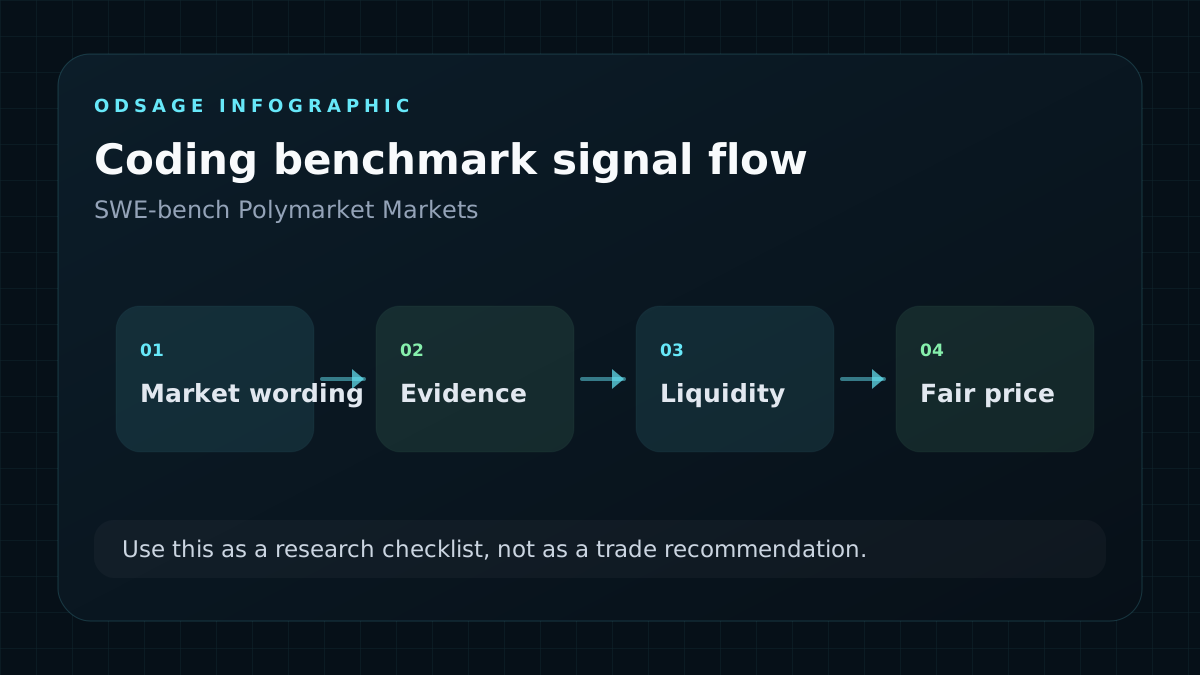
The official SWE-Bench documentation describes tasks where a model receives a codebase and issue, then must generate a patch that resolves the problem. That is materially different from a chat preference leaderboard.
For market analysis, this matters because a coding benchmark can be strong evidence for software-engineering capability but weak evidence for general consumer chatbot quality. The page should make that distinction clearly.
How coding results can affect model odds
A strong SWE-Bench result can support a lab's best-model odds if the market wording values coding capability or if traders believe coding ability proxies for broader reasoning. It can also move release odds if the result suggests a new model is close to public launch.
The opposite is also true. If a model underperforms on coding while doing well on math or chat preference, traders need to decide whether the market cares about coding at all.
The contamination and freshness problem
Benchmarks can age. Models may be trained on related data, benchmark suites can become over-optimized, and public leaderboards can lag behind private or product-specific behavior.
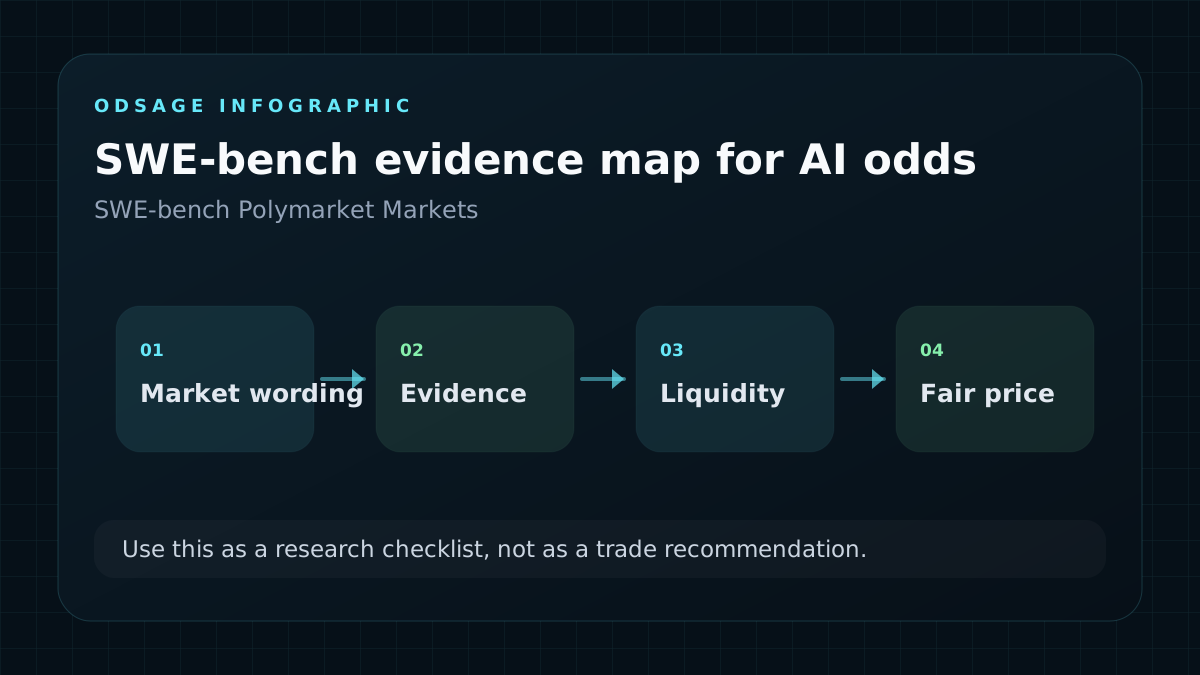
That does not make SWE-Bench useless. It means Odsage should present it as one signal in a signal stack, next to LiveBench, LMArena, FrontierMath, release artifacts, and order-book evidence.
How Odsage should use this page
This article should become the coding benchmark spoke in the AI benchmark cluster. It links upward to best AI model odds, sideways to FrontierMath, and downward to any future market pages that depend on SWE-Bench or coding-agent performance.
That structure builds topical authority without creating another broad best-model article.
FAQ
Frequently asked questions
What is SWE-Bench?
SWE-Bench is a benchmark that evaluates models on real-world software issues, where the model must generate a patch for a codebase and issue.
Does a SWE-Bench result decide a Polymarket AI model market?
Only if the market wording makes coding performance relevant. Otherwise, it is one supporting signal among several.
Why target a zero-volume benchmark keyword?
Because emerging benchmark-market terms can build topical authority before broader competitors publish dedicated pages.
Sources and methodology
Sources used for this guide
Odsage combines public source links with prediction-market context, related market pages, calculator workflows, and visible FAQ content. Market prices are informational and are not financial advice.