Trading Edge
Polymarket Fees for AI Market Traders
Understand Polymarket fees, spreads, breakeven probability, and why AI market edge should be checked after costs and liquidity.
Key takeaways
- DataForSEO shows polymarket fees at 1,000/mo, LOW competition index 16, and CPC around $80.50.
- This is a broad keyword, so the Odsage angle must stay focused on AI market edge, not generic fee documentation.
- Fees, spread, and slippage can turn a positive-looking AI market edge into a breakeven or negative setup.
Why a fees article belongs on Odsage
Polymarket fees is the highest-demand keyword in this batch: 1,000 monthly searches, LOW competition, competition index 16, and CPC around $80.50 in the DataForSEO pull. That is unusual for a site starting with no authority.
The risk is cannibalization by generic finance content. Odsage should not try to become a full Polymarket fee manual. The rankable angle is narrower: how fees, spread, and execution costs affect AI prediction-market edge.
What Polymarket says about fees
Polymarket's help material says certain markets can charge fees and that costs may also appear through third-party provider, swapping, bridging, gas, or network flows. The fee picture can vary by market type and by how the trade is entered.
For an Odsage reader, the practical takeaway is not to memorize every fee schedule. It is to check whether the market they are analyzing has a fee, whether the spread is wide, and whether the trade still makes sense after costs.
How fees change fair probability
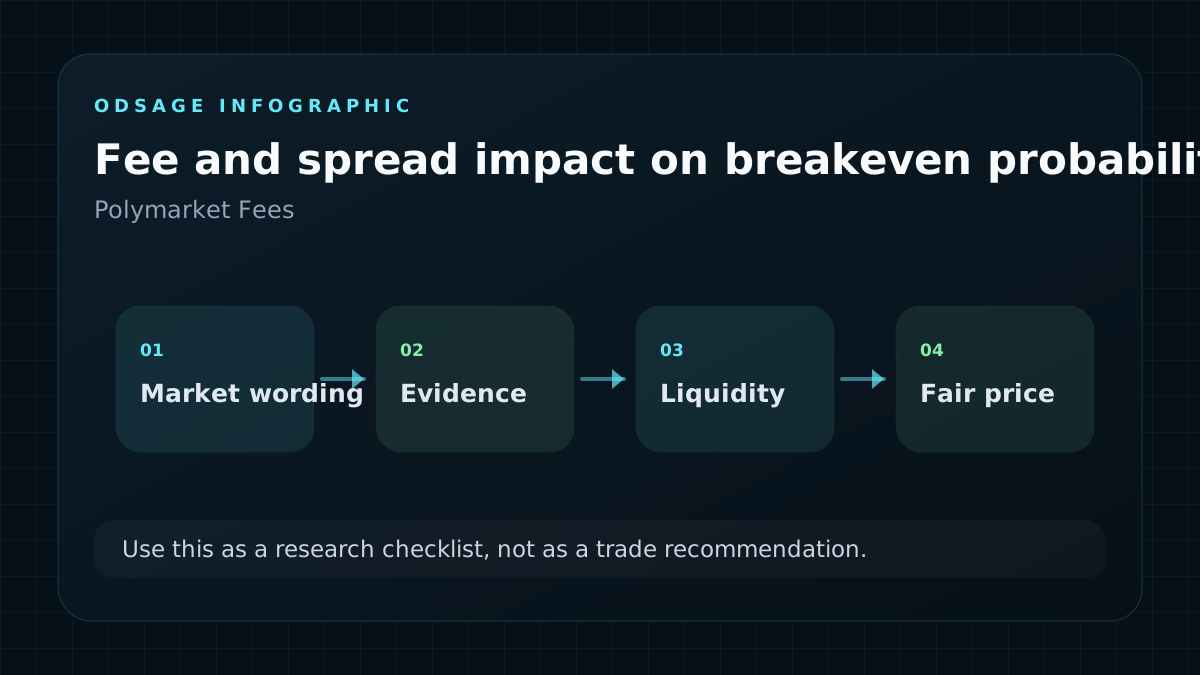
If a yes share is priced at 0.52, a user might think any fair probability above 52 percent is positive edge. That is too simple. The effective breakeven can move higher once fees, spread, and slippage are included.
This is where Odsage can be better than a raw calculator. The content should teach users to compare market price, expected value, order-book depth, and resolution risk before interpreting a positive output.
Why AI markets need a stricter cost check
AI markets often have ambiguous resolution details. A GPT, Claude, FrontierMath, or IPO market can look mathematically attractive, but ambiguity can erase the edge faster than a visible fee.
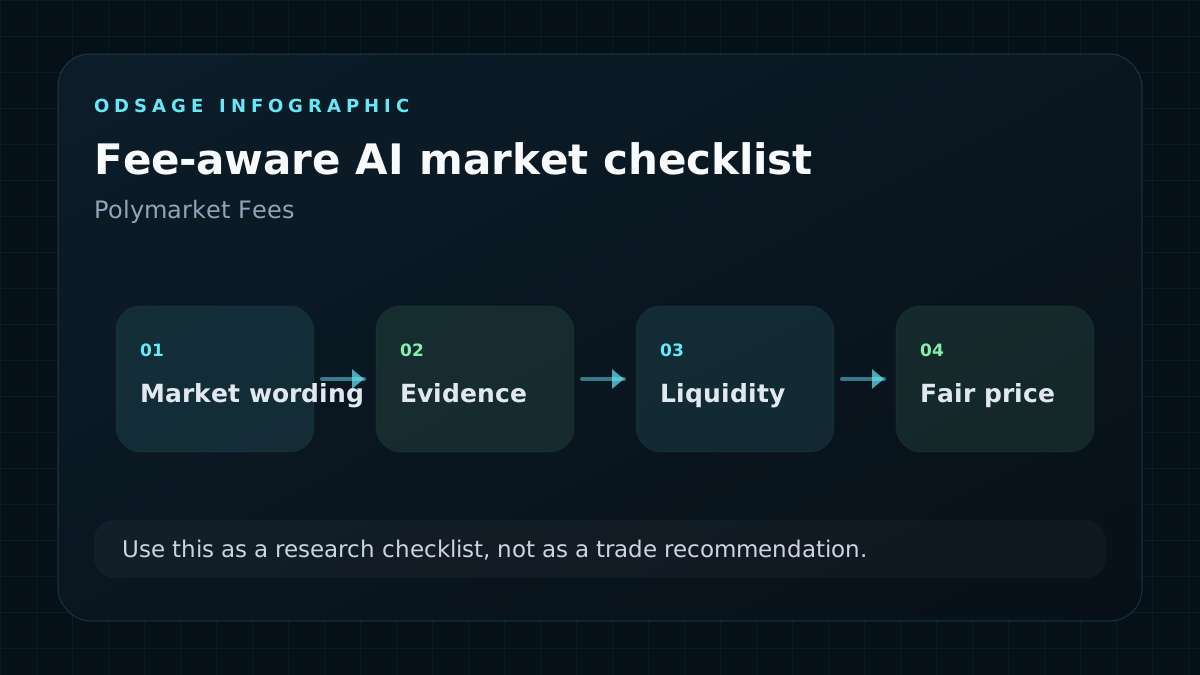
That is why the Odsage workflow should treat fees as one layer. The other layers are wording, liquidity, news quality, benchmark relevance, and sentiment divergence.
The SEO-safe position
This article can rank for polymarket fees without pretending to be the official fee source. It should link to official fee pages, explain the AI-market use case, and repeatedly remind readers to verify the active fee display before trading.
That keeps the page helpful, people-first, and aligned with Google's guidance: use the terms people search for, but satisfy the real task behind the query.
FAQ
Frequently asked questions
Does Polymarket always charge trading fees?
No. Fee treatment can vary by market type and route. Always check Polymarket's visible fee information and official help pages before placing any trade.
Why do fees matter for AI market edge?
Many AI market edges are small. Fees, spread, and slippage can move the breakeven probability enough to change the decision.
Should Odsage replace Polymarket's official fee docs?
No. Odsage should explain how fees affect AI odds analysis and link readers to official Polymarket sources for current rules.
Sources and methodology
Sources used for this guide
Odsage combines public source links with prediction-market context, related market pages, calculator workflows, and visible FAQ content. Market prices are informational and are not financial advice.