Trading Edge
Polymarket Order Book: AI Market Liquidity Guide
Learn how to read a Polymarket order book for AI markets using bids, asks, spread, depth, liquidity, and fair-probability checks.
Key takeaways
- DataForSEO shows 50/mo search volume, LOW competition index 17, and CPC around $35.61 for polymarket order book.
- The order book turns a headline probability into a tradable context: bid, ask, spread, size, and depth.
- AI markets can look efficient at the midpoint while still being difficult to enter or exit at size.
What the order book adds to AI odds
A Polymarket probability is the clean number everyone sees. The order book explains whether that number is easy to trade. For AI markets, this matters because release rumors and benchmark headlines can move prices faster than liquidity can rebuild.
The DataForSEO evidence is strong enough for a zero-authority SEO play: 50 monthly searches, LOW competition, competition index 17, and CPC around $35.61. The SERP has official docs and scattered developer content, but few pages explain order-book reading for AI prediction markets specifically.
Bid, ask, spread, and midpoint
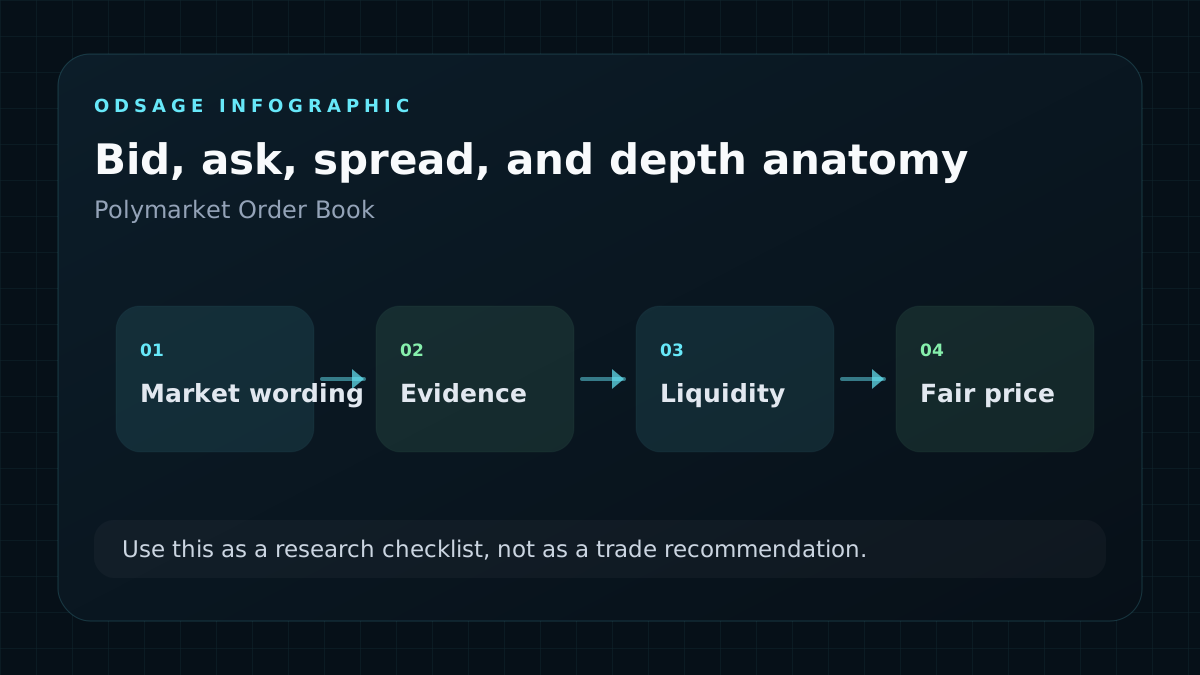
The bid is what buyers are willing to pay. The ask is what sellers are willing to accept. The spread is the gap between them. A tight spread usually means the displayed probability is more actionable; a wide spread means the midpoint can be misleading.
Polymarket explains that displayed prices can use the midpoint of the bid-ask spread, and when the spread is wide the last traded price can become more relevant. That is why Odsage should teach readers to check spread before calculating edge.
Depth is the difference between signal and slippage
Depth is the quantity available at each price level. A market can show a 40 percent probability, but if there is little size near 40 cents, a moderate trade can push the effective entry price higher.
This is especially important for AI model markets because searchers often arrive after news breaks. By then, the best price may be gone and the remaining book may not support the same expected-value calculation.
How Odsage should use order-book data
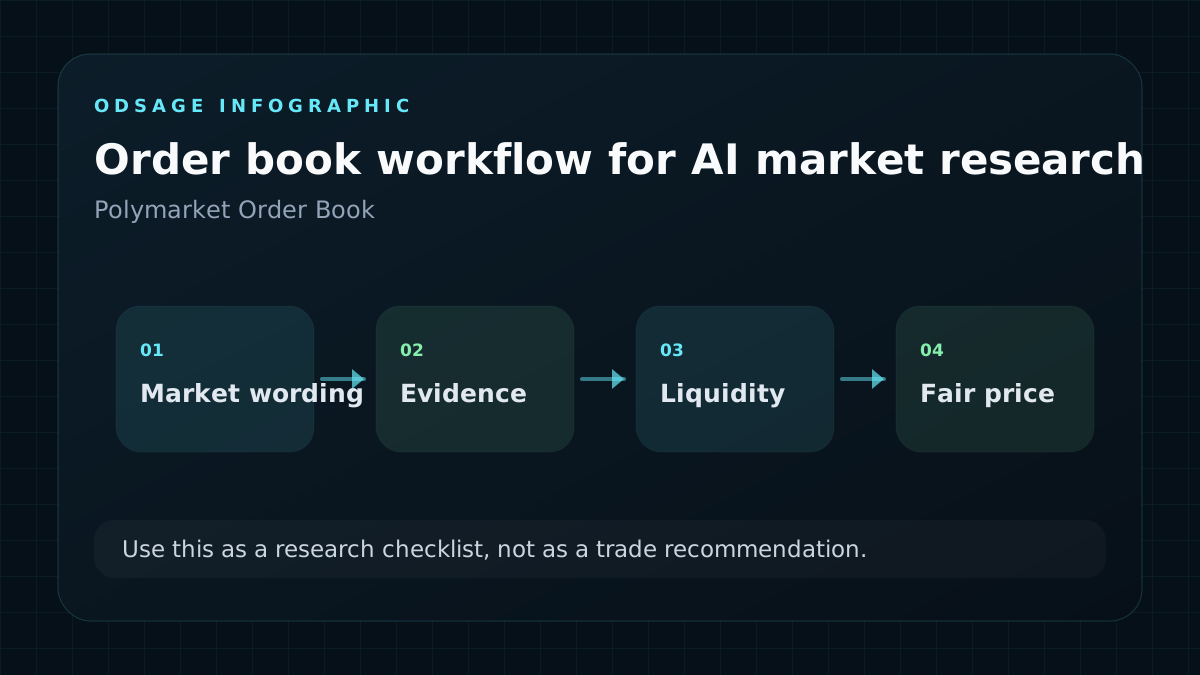
The site should use order-book concepts to make the calculator more honest. A fair probability can be above the midpoint, but the practical edge disappears if the ask price is much higher or if the available size is tiny.
That creates a reason for readers to come back. They can use Odsage to compare headline probability, sentiment, news, and execution quality rather than checking one isolated market page.
The safest interpretation
A good order book does not make a prediction true. It only means the current market is easier to trade around the displayed price. Evidence still has to come from model releases, benchmark results, company statements, and resolution wording.
For Odsage, the best SEO angle is practical and narrow: teach the reader how to turn a visible AI odds number into a liquidity-aware research decision.
FAQ
Frequently asked questions
What is a Polymarket order book?
It is the visible supply and demand for a market: bids, asks, quantities, spread, and depth at different prices.
Why does the order book matter for AI model odds?
AI markets can move quickly after news. The order book shows whether the displayed probability is actually tradable or only a thin midpoint.
Is order-book depth the same as probability?
No. Probability is the implied price. Depth shows how much size is available around that price.
Sources and methodology
Sources used for this guide
Odsage combines public source links with prediction-market context, related market pages, calculator workflows, and visible FAQ content. Market prices are informational and are not financial advice.