Prediction Markets
How Does Polymarket Work? Odds, Shares, and Resolution
Learn how Polymarket works through prices, yes/no shares, order books, market rules, resolution sources, and edge checks before using any odds.
Key takeaways
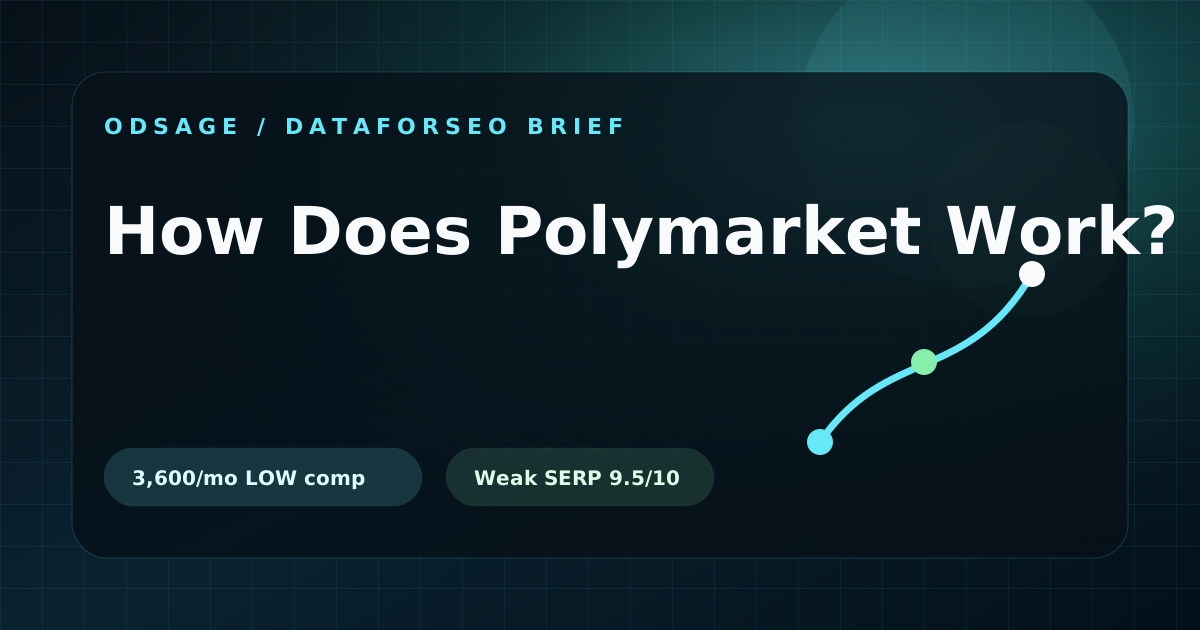
- DataForSEO shows 3,600/mo search volume, LOW competition index 24, and CPC around $17.97 for how does Polymarket work.
- Polymarket prices are best read as market-implied probabilities, but the tradable price depends on bid, ask, spread, and available size.
- The market title is not enough. Resolution rules, source quality, and market clarification decide what actually pays out.
What Polymarket actually trades
Polymarket is a prediction market where traders buy and sell shares tied to real-world outcomes. Most markets have a YES side and a NO side. If the final outcome matches the share you hold, the winning shares settle at $1.00 while losing shares settle at $0.
That structure is why a 37 cent YES share is usually read as roughly a 37 percent market-implied probability. It is not a forecast from Odsage, Polymarket, or an oracle. It is the price other traders are currently willing to accept after fees, uncertainty, and liquidity are considered.
Prices are probabilities, but not guarantees
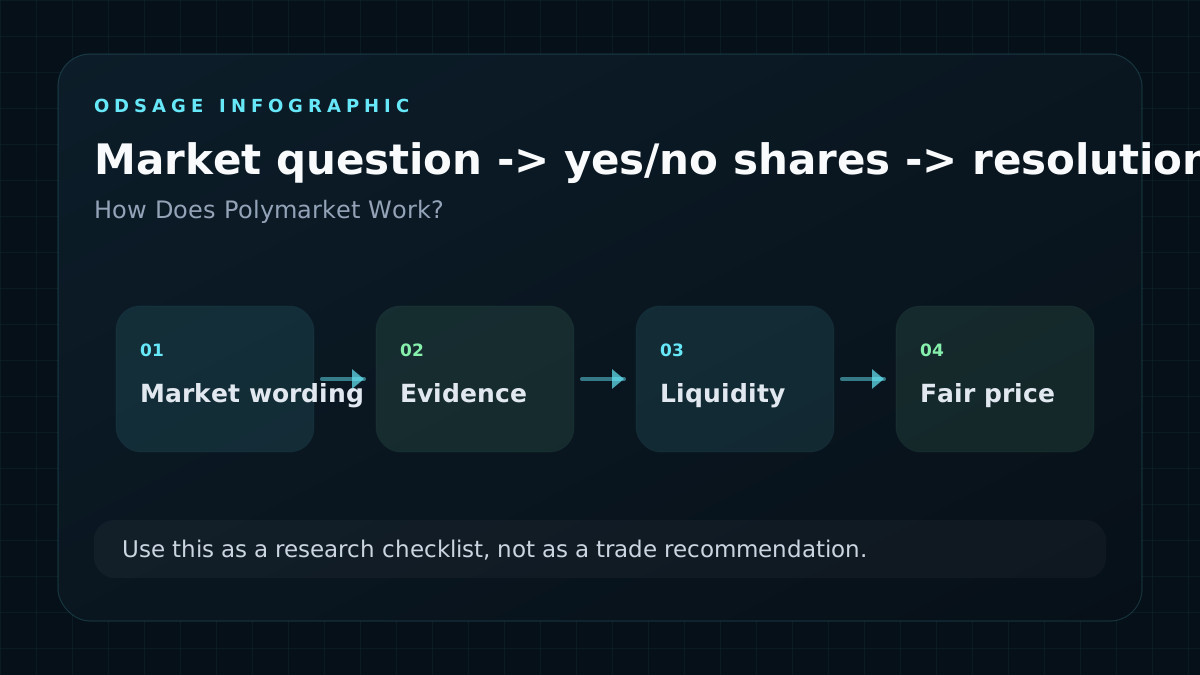
Polymarket's help center explains prices as probabilities and says displayed prices come from supply and demand. The practical problem is that a displayed probability can be cleaner than the trade you can actually execute.
If the bid is 34 cents and the ask is 40 cents, the midpoint may show 37 percent. A trader who wants to buy immediately may have to pay the ask. That is why Odsage separates headline probability from execution quality on its calculators and dashboards.
How a market resolves
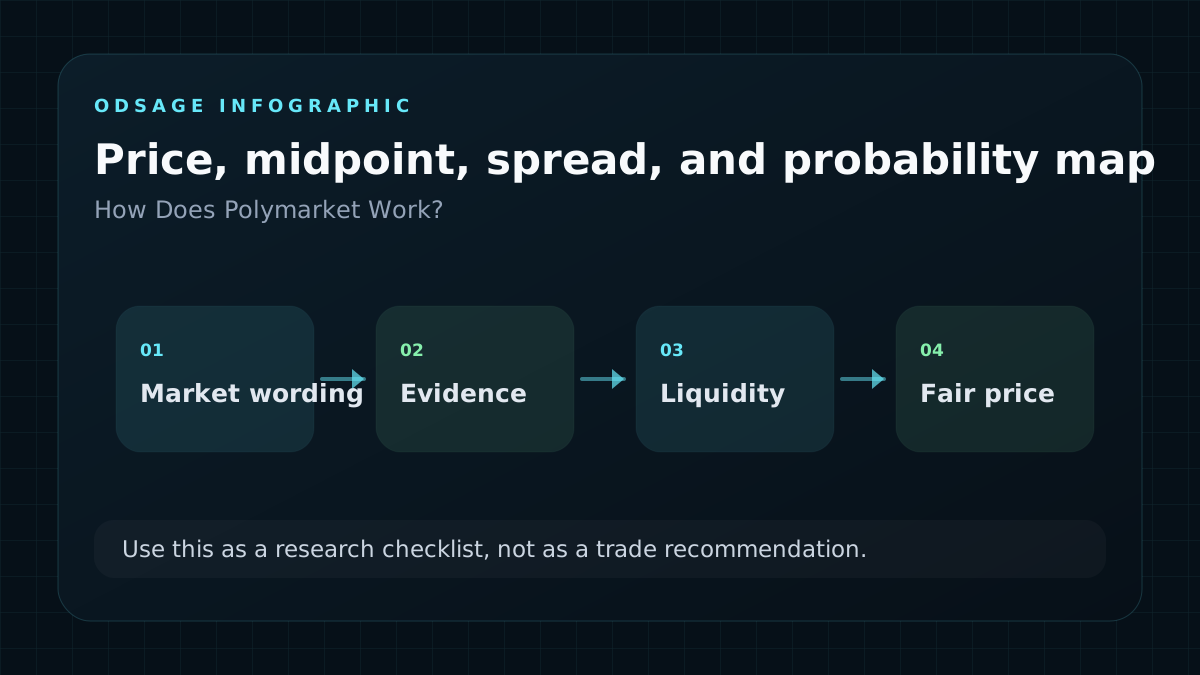
A market does not resolve from the headline alone. The rules define the resolution source, deadline, edge cases, and what evidence counts. This is where many new traders make mistakes: they price the headline, but the payout follows the rules.
For AI markets, that means checking exact model names, release dates, benchmark definitions, and official source language. A rumor can move the price without satisfying the final condition.
How traders make or lose money
The clean version is simple: buy YES below your fair probability or buy NO when you think the market is too optimistic. The real version has more friction. You still need to account for spread, fees, liquidity, timing, and whether you can exit before resolution.
Polymarket says shares can be sold before resolution through market orders or limit orders. That matters because a position can be closed early, but the exit price depends on the order book available at that moment.
The Odsage workflow for beginners
The safest beginner workflow is not to chase the newest market. Start with the question, read the rules, convert the price into probability, check the spread, compare outside evidence, then decide whether your fair probability is meaningfully different from the price you can actually trade.
That is the reason this page links into the implied probability, order book, fees, and calculator pages. The answer to how Polymarket works is not one mechanic. It is the whole chain from wording to execution.
FAQ
Frequently asked questions
How does Polymarket work in simple terms?
Polymarket lets users trade shares tied to event outcomes. A winning share settles at $1.00 and a losing share settles at $0, so the trading price is commonly read as the market's implied probability.
Does Polymarket set the odds?
No. Prices come from supply and demand between traders. The displayed price may use order-book midpoint logic, so the price you can trade can differ from the headline probability.
Can I sell a Polymarket position before resolution?
Yes, positions can generally be sold before resolution, but the exit depends on available buyers, order-book depth, and the price you are willing to accept.
Sources and methodology
Sources used for this guide
Odsage combines public source links with prediction-market context, related market pages, calculator workflows, and visible FAQ content. Market prices are informational and are not financial advice.