Prediction Markets
Kalshi Prediction Markets: Data, Rules, and API Guide
Understand Kalshi prediction markets, event contracts, pricing, settlement rules, public market data, and how Odsage can compare Kalshi with Polymarket.
Key takeaways
- DataForSEO shows 5,400/mo search volume, LOW competition index 8, and CPC around $8.64 for kalshi prediction markets.
- Kalshi's public API can support market data, event metadata, trades, and order-book research without turning Odsage into a brokerage interface.
- The best Odsage angle is not generic Kalshi coverage. It is comparison-grade market intelligence against Polymarket, Parlay, sentiment, and AI news.
What Kalshi prediction markets are
Kalshi prediction markets are event-contract markets. Instead of buying a company stock, a trader takes a position on whether a specified real-world event will happen under defined rules.
Kalshi's help center explains this as trading contracts based on whether specific events will happen, with prices reflecting the collective view of market participants. For Odsage, that makes Kalshi useful as a second lens beside Polymarket: two markets can price similar information differently.
How Kalshi prices work
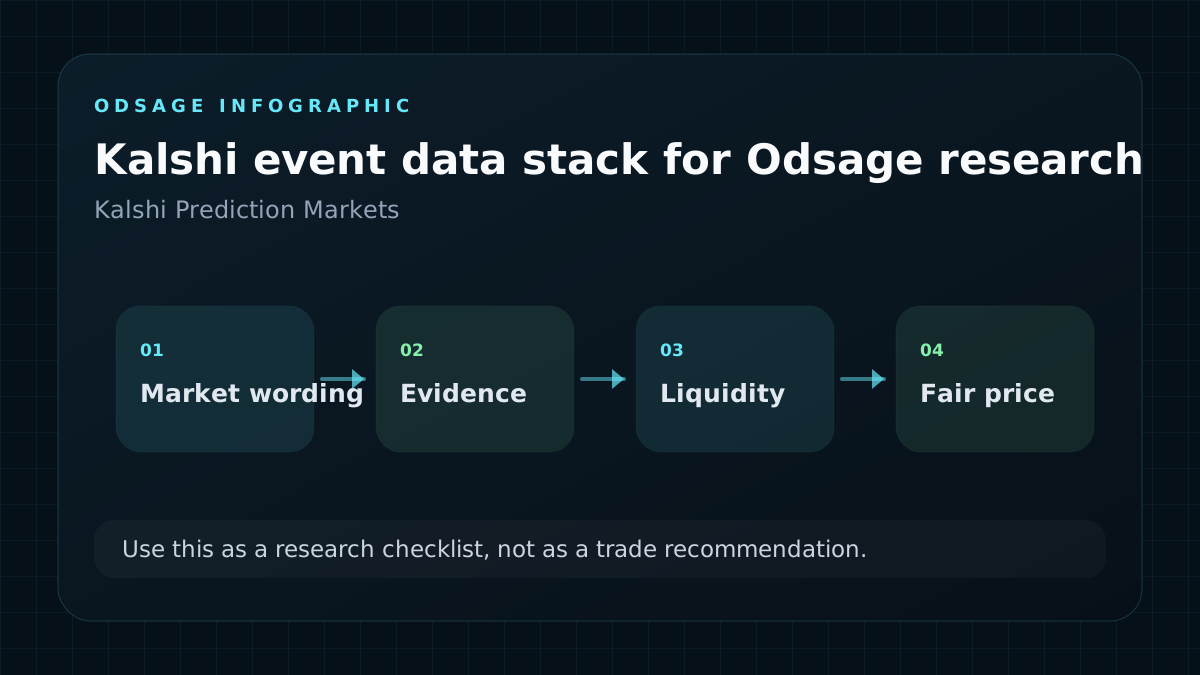
Kalshi describes contract prices as tied to market-assigned probability. A 70 cent YES price implies the market is treating the event as roughly 70 percent likely, before you adjust for fees, spread, and the exact price you can trade.
That is similar enough to Polymarket for Odsage readers to understand quickly, but the source of friction can differ. Kalshi is a centralized exchange with its own market rules and fees. Polymarket is more crypto-native and order-book driven. The comparison matters more than the label.
Why the Kalshi API matters for Odsage
Kalshi's developer docs describe public market data endpoints for series, events, markets, and order-book data. That is exactly the type of stats layer Odsage can use without asking visitors to connect accounts or place trades.
The practical product idea is a comparison desk: show a Polymarket AI market, related Kalshi categories or event-contract analogs where available, Parlay API context, and social/news sentiment. That gives readers a reason to return because the page is a research workflow, not a static article.
Settlement rules are the hidden edge
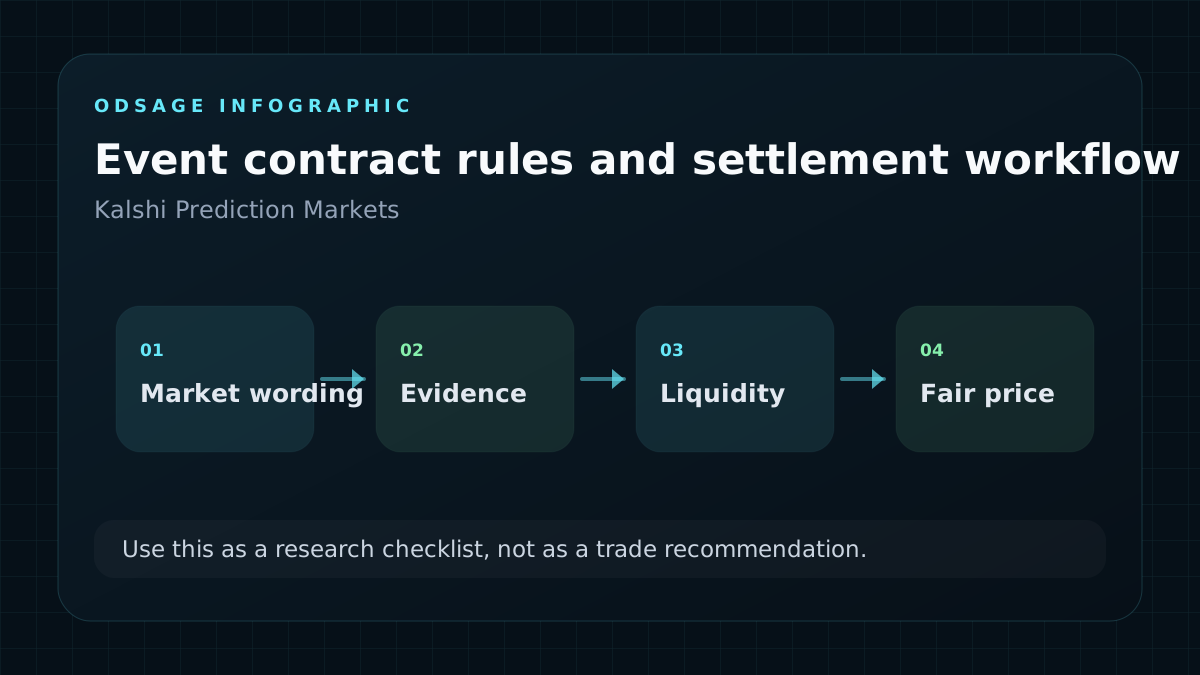
The most important part of any prediction market is not the app interface. It is the contract wording and settlement source. Kalshi says outcomes are determined from each contract's terms and conditions and the source named in those rules.
For AI and technology markets, Odsage should treat settlement language as a separate signal. A model launch, benchmark result, or company statement only matters if it matches the market's source and definition.
How this becomes a topical authority page
A broad Kalshi page would be hard for a low-authority site to win. A Kalshi prediction markets page tied to market data, rules, and Odsage's AI odds workflow is more defensible.
The internal-linking role is clear: this page should feed the Polymarket vs Kalshi comparison, the calculator page, and future data-source pages when Kalshi snapshots are added to the daily pipeline.
FAQ
Frequently asked questions
What are Kalshi prediction markets?
They are event-contract markets where traders take positions on whether defined future events will happen. Prices move as market participants update their views.
Can Odsage use Kalshi data without an affiliate account?
Yes for public research use cases. Kalshi documents public market data endpoints that can be used for events, markets, trades, and order-book context without positioning Odsage as an execution platform.
Is Kalshi the same as Polymarket?
No. Both are prediction-market platforms, but they differ in market structure, onboarding, data surfaces, settlement workflow, and the types of markets where each platform tends to be strong.
Sources and methodology
Sources used for this guide
Odsage combines public source links with prediction-market context, related market pages, calculator workflows, and visible FAQ content. Market prices are informational and are not financial advice.