AI Releases
Gemini 4 Release Odds 2026: Markets Say 70% by October
Gemini 4 release odds sit near 70% by 31 October on Polymarket and Kalshi, but the two venues price different products. Here is what each rule really pays.

Key takeaways
- Polymarket prices Gemini 4.0 shipping by 31 October at 70.5% and Kalshi prices the 1 November equivalent at a 70% mid, so the two venues agree almost exactly on the headline number.
- They agree for different reasons: Polymarket's contract opens by naming Gemini 4.0 Flash specifically, while Kalshi's rules say only that Google must release Gemini 4 to the public.
- The separate next Gemini Pro contracts price a lower 58.5% on Polymarket and 64.5% on Kalshi, which means the books are implying Gemini 4 could arrive without a Pro variant.
- Google has led five of its six Gemini generations with Pro, and the current Pro drought has run 6.7 months since Gemini 3.1 Pro on 19 February 2026, already the second longest on record.
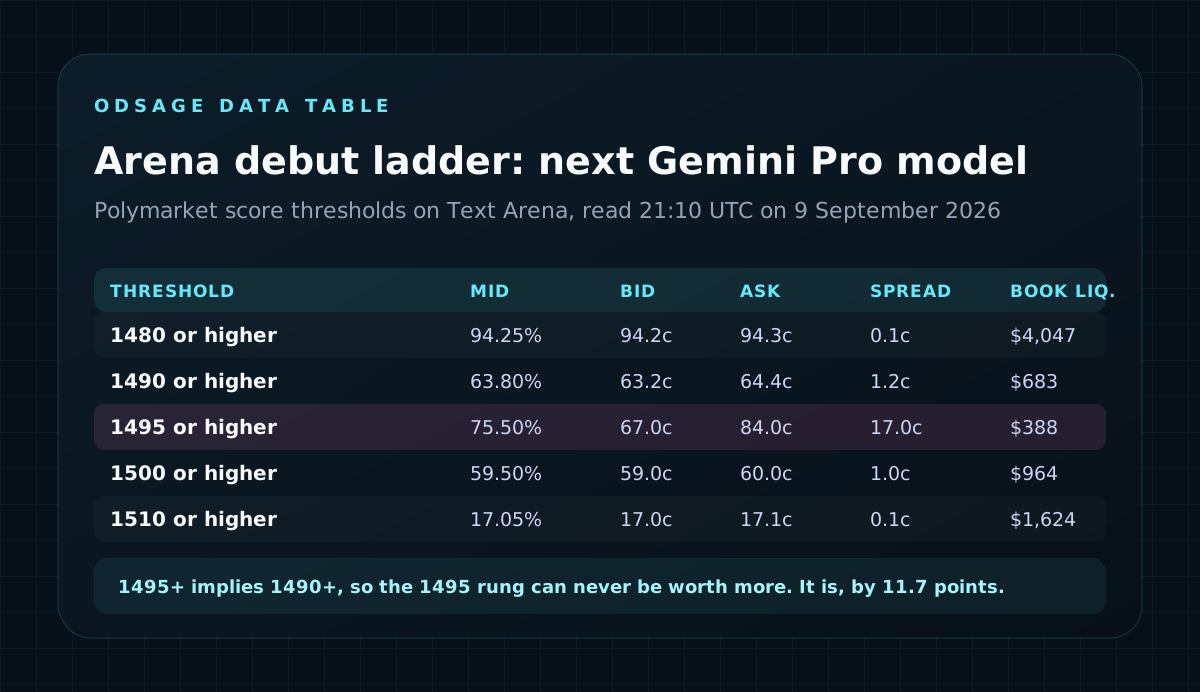
- The Arena debut ladder is broken: the 1495-or-higher rung prices 75.5% against 63.8% for 1490-or-higher, which is impossible, and the mispricing survives because that rung holds $388 of book liquidity.
Gemini 4 release odds price two different products
Search for a Gemini 4 release date and you get three numbers that do not reconcile: an October rumour, a November analyst estimate, and a prediction-market price somewhere in the seventies. The reason is not that one of them is lying. It is that the contracts carrying real money are not all asking about the same product, and a reader who skips the rule text ends up holding a position on a model Google was never about to ship on that date.
There is close to $2m of lifetime volume across five live Polymarket Gemini contracts, $1,987,538 as of this read, plus a thinner Kalshi ladder alongside them. We pulled both books directly, the Polymarket Gamma API and the Kalshi trade API, at 21:10 UTC on 9 September 2026, and every price in this guide is a mid taken from that snapshot with the bid and ask printed next to it.
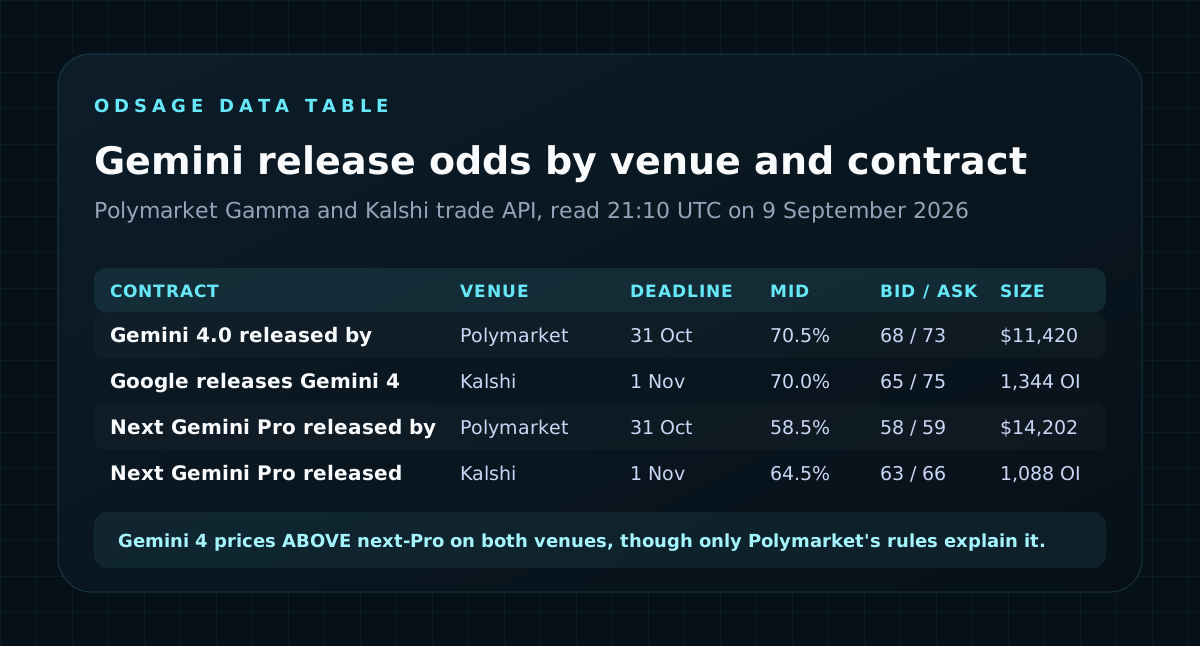
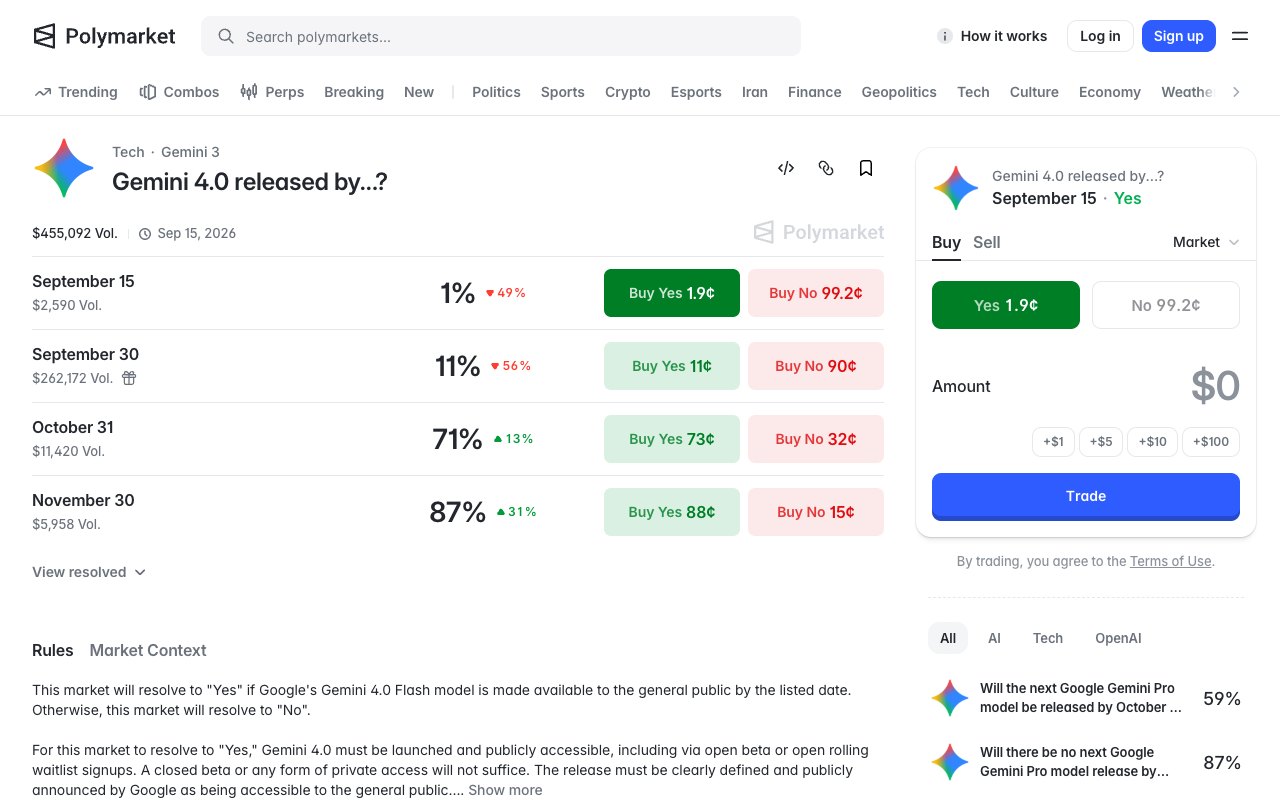
The headline is straightforward. Polymarket prices Gemini 4.0 released by 31 October at 70.5% Yes, bid 68 against ask 73. Kalshi prices Google releases Gemini 4 before 1 November at a 70% mid, bid 65 against ask 75, with 1,344 contracts of open interest. Two venues, two user bases, two fee structures, and a half-point of daylight between them.
That agreement is worth less than it looks, and the rest of this guide explains why. The short version: the two Gemini 4 contracts read differently on which variant counts, the two next Gemini Pro contracts disagree with both, one ladder sums to 97 cents, and one ladder contains an outright pricing impossibility.
Polymarket's Gemini 4.0 contract is written around Flash
The first sentence of Polymarket's resolution text is the part almost nobody reads: the market resolves Yes if Google's Gemini 4.0 Flash model is made available to the general public by the listed date. Not Gemini 4. Not Gemini 4 Pro. Flash, by name, in the opening line.
Two paragraphs later the same text widens considerably, saying Gemini 4.0 refers to a product explicitly named Gemini 4.0 or one that is recognised as a successor to Gemini 3, and that anything labelled Gemini 3.0 Flash or Gemini 2.5 will not count. Those two passages do not sit comfortably together. One names a single variant; the other describes a generation.
This matters because the reporting that drives the search traffic is about Gemini 4 Pro. If Google ships a Gemini 4 Pro preview in October and holds Flash back for a few weeks, a strict reading of the opening line resolves the market No while every headline says Gemini 4 has launched. Polymarket's fallback is official information from Google plus a consensus of credible reporting, which in that scenario points the other way.
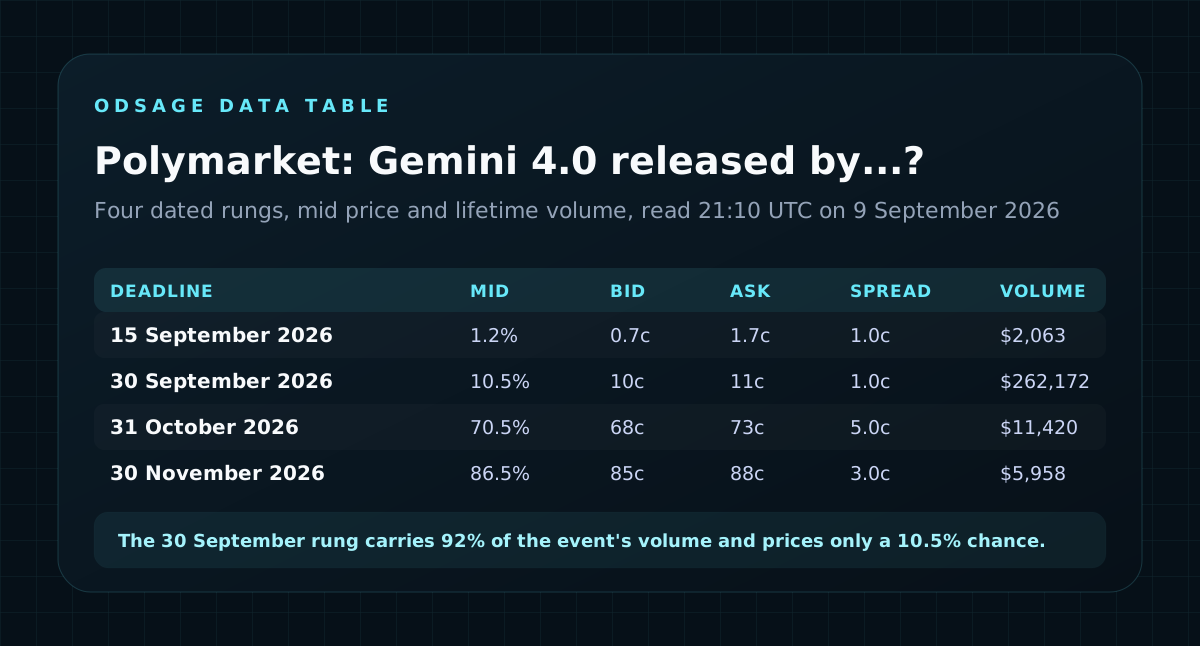
So the honest description of this contract is that it is 70.5% to resolve Yes and carries an unquantified tail risk of a rules dispute. If you are pricing it, the resolution ambiguity is part of the trade, not a footnote to it. The dated ladder underneath shows how sharply the market discounts anything sooner than November.
Kalshi asks the plainer question and lands in the same place
Kalshi's KXGEMINI series is the cleaner contract to read. Its primary rule is one sentence: if Google releases Gemini 4 before the listed date, the market resolves Yes. The secondary rule adds that the release must be public and outside a closed beta, while explicitly allowing a launch restricted to a high-cost subscription tier. No variant is named anywhere.
That drafting removes the Flash problem entirely and introduces a different one. A paid-tier-only release counts on Kalshi, which is a meaningfully looser bar than Polymarket's requirement of general public accessibility including open beta or rolling waitlist. Two contracts, nominally the same event, with different definitions of shipped.
The prices across the Kalshi ladder run 2c for before 16 September, 12c for before 1 October, 70c mid for before 1 November, 66c mid for before 15 November, 67c mid for before 1 December and 85c mid for before 1 January 2027. The mid for 15 November sitting below the mid for 1 November is the sort of ordering error that thin books produce, and it should be read as noise rather than signal.
Depth is the constraint. The 1 October rung carries 11,265 contracts of open interest and the rest carry between 46 and 1,940. On a market that size, a single trader with a view moves the mid several cents, so treat Kalshi here as a sanity check on Polymarket rather than an independent forecast.

Google has led five of six generations with Pro
The separate next Gemini Pro contracts are where the interesting disagreement lives. Polymarket prices a next Pro model by 31 October at 58.5%, bid 58 against ask 59, on $14,202 of volume. Kalshi prices the 1 November equivalent at a 64.5% mid. Both sit below their own venue's Gemini 4 number.
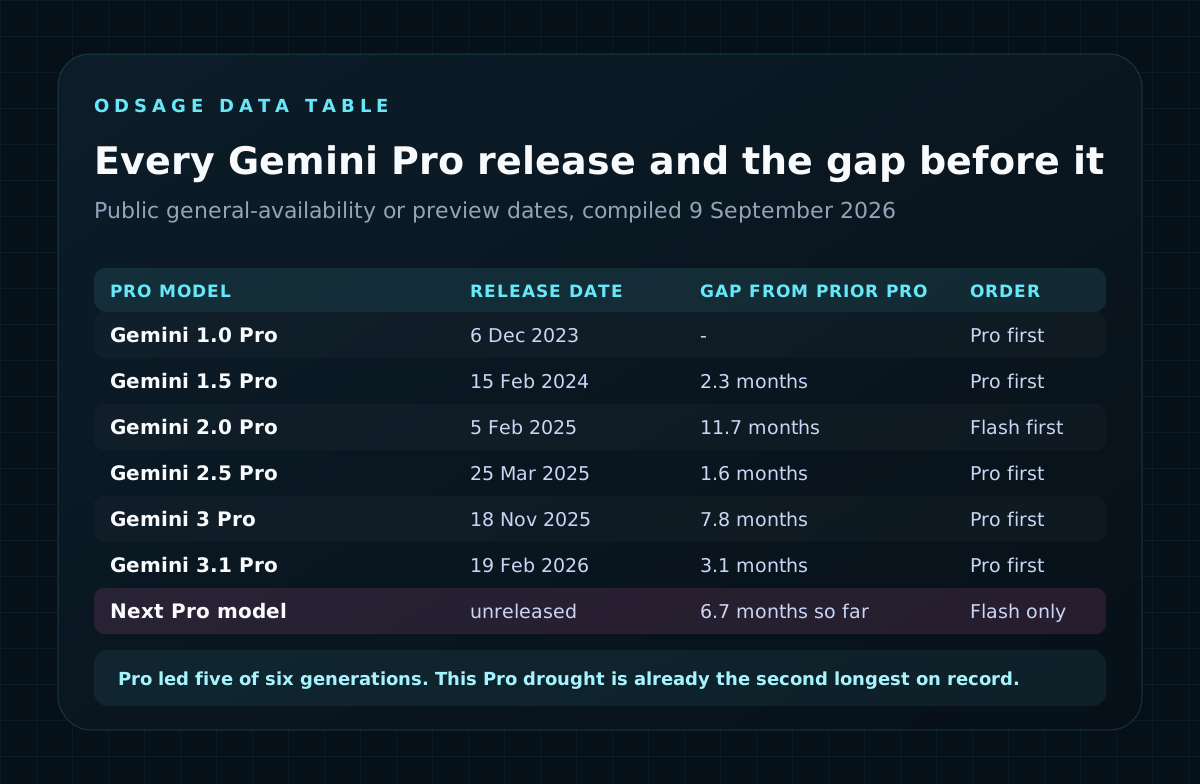
Read literally, that ordering says the books assign real probability to Gemini 4 arriving without any Pro variant attached. History argues against it. Pro led the generation in five of Gemini's six launches, and the single exception was Gemini 2.0, where Flash Experimental shipped on 11 December 2024 and Pro followed on 5 February 2025.
The cadence table below is the other half of the case. Gaps between consecutive Pro releases have run 2.3, 11.7, 1.6, 7.8 and 3.1 months, a median of 3.1 and a mean of 5.3. The gap since Gemini 3.1 Pro on 19 February 2026 is now 6.7 months and counting, which already exceeds both and is the second longest Pro drought Google has had.
Meanwhile the Flash line has kept shipping: 3.5, 3.6, 3.7 and 3.8 Flash variants have all reached the Arena leaderboard since February. Google is not slow at the moment. It is slow specifically at Pro, which is exactly the release these contracts turn on.
What Google has actually said, and what it has not
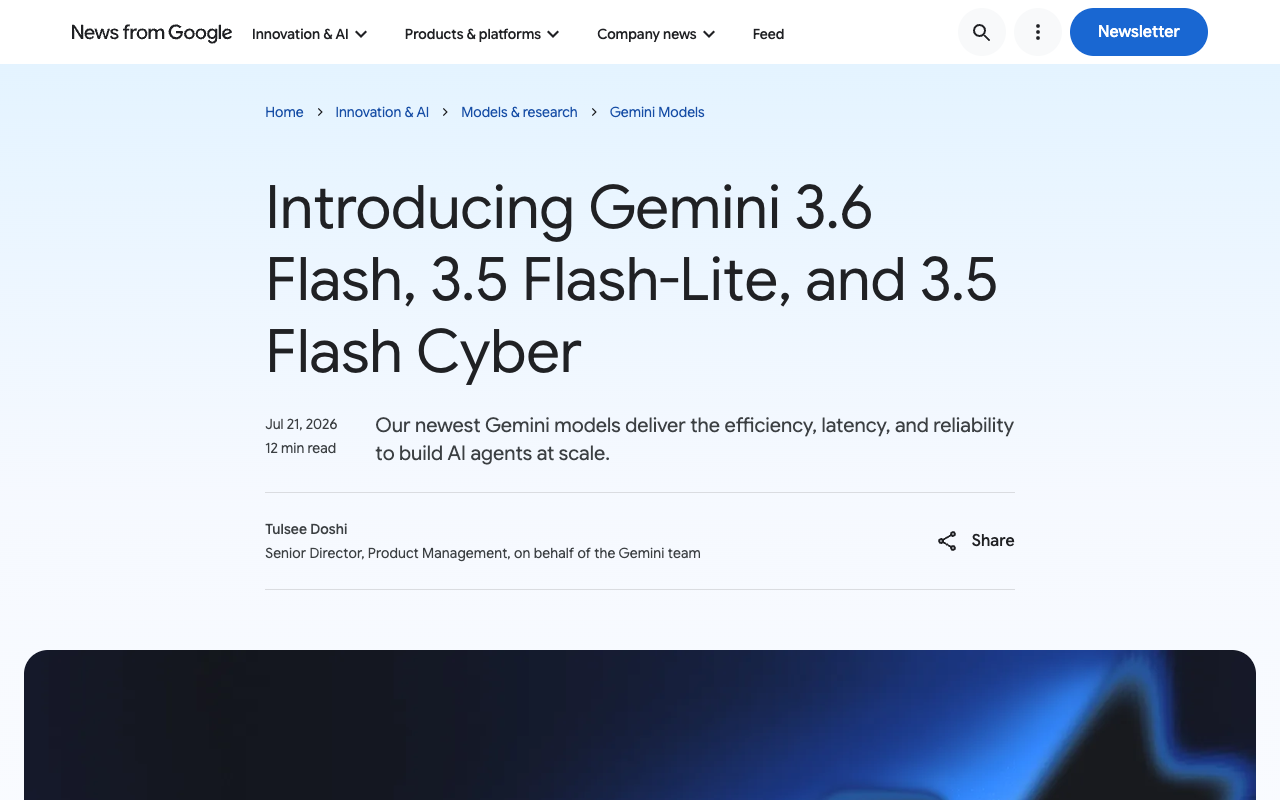
Two statements are on the record and both are narrower than the coverage built on them. Google's blog post of 21 July 2026 announcing Gemini 3.6 Flash said: we have started our most ambitious pre-training run yet, for Gemini 4, and are excited by the progress. The same post said Gemini 3.5 Pro is currently testing with partners and we plan to make it broadly available as soon as it's ready.
Two days later, on Alphabet's Q2 2026 earnings call, Sundar Pichai said Google is training Gemini 4 and is being ambitious with it, adding that a larger base model would be needed to compete at the frontier and naming coding and agentic coding as the capabilities Google most needs to improve.
That is the entire confirmed record. There is no announced Gemini 4 date, no announced Gemini 3.5 Pro date, and no company statement putting either in October. The widely repeated October and November estimates are analyst inference from past cadence, and the reports of a Gemini 4 Pro delay are unattributed. Treat them as colour, not as inputs.
The partner-testing line is the underrated one. A model in partner testing on 21 July is a model with a finished training run and a rollout schedule, which is a far better argument for a near-term Pro release than any rumour about Gemini 4. It is also why the next Pro contracts deserve more attention than the Gemini 4 headline.
The weekly ladder sums to 97 cents and still is not free money
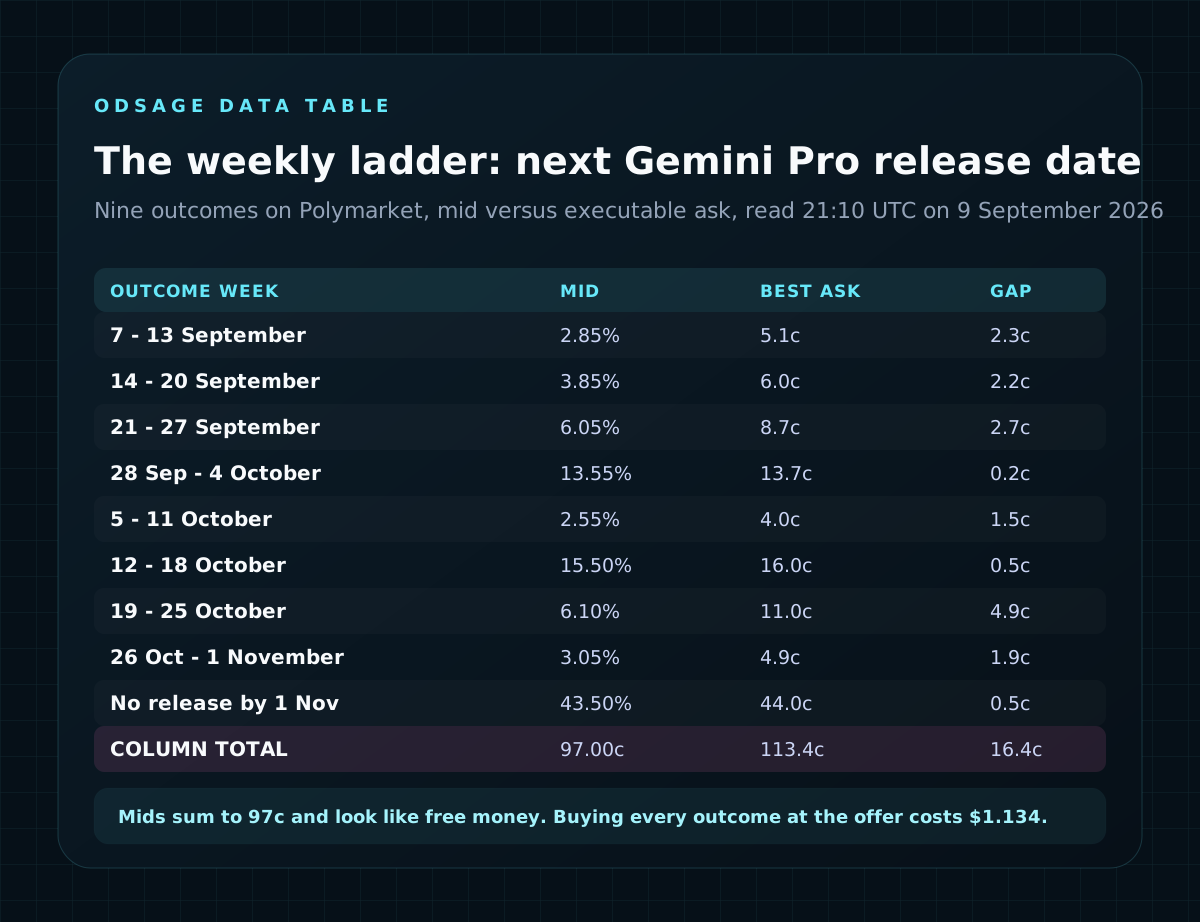
Polymarket also runs a dated version of the next Pro question, nine mutually exclusive weekly buckets from 7 September through 1 November plus a no-release outcome. Because exactly one outcome must resolve Yes, the prices should sum to 100 cents. They sum to 97.
Three cents of underround looks like a standing invitation to buy the whole board and collect a dollar. It is not, and the reason is the gap between the mid and the price you can actually hit. Buying every outcome at the best offer costs $1.134, a 13.4-cent overround, because seven of the nine buckets quote several cents wide on almost no size.
The two buckets that quote tight are the two that matter: 28 September to 4 October at a 13.55% mid with a 0.2-cent spread, and 12 to 18 October at 15.50% with a 0.5-cent spread. Those are the weeks traders have an actual view on. The rest of the ladder is a mid-price fiction sitting between a stale bid and a hopeful offer.
One useful cross-check does come out of it. The no-release-by-1-November bucket prices 43.5%, implying a 56.5% chance of a Pro release by then, against 58.5% on the separate by-31-October contract. Two differently structured markets landing two points apart is the strongest evidence in this whole complex that the high-fifties number is real.
The Arena debut ladder prices 1495 above 1490
The fifth Gemini contract asks what the next Pro model will score on the Text Arena leaderboard the day after it appears. It is a threshold ladder, and one rung on it is priced at something that cannot be true.
A model that scores 1495 or higher has necessarily scored 1490 or higher. The 1495 rung can therefore never be worth more than the 1490 rung. Right now the 1495 rung mids at 75.5% and the 1490 rung mids at 63.8%, an 11.7-point inversion. The 1500 rung at 59.5% sits below both, which is at least the right way round relative to 1495 but leaves only 4.3 points between 1490 and 1500.
The inversion survives because the 1495 rung holds $388 of book liquidity and quotes 67 bid against 84 offered, a 17-cent spread, so its mid is an artefact of an empty book rather than a considered price. There is a small real edge in it: buying the 1490 rung at 64.4c and the 1495 No at 33c costs 97.4c for a position that pays at least $1.00 in every outcome. The constraint is size, not logic.
For context on the thresholds themselves, Google's best-ever Pro score on the board is 1487, from gemini-3.1-pro-preview, with gemini-3-pro at 1486. The board leader is claude-fable-5 at 1507. So the 1500 rung at 59.5% is pricing a 13-point jump over Google's own record that would put the next Pro within three points of the top model on the leaderboard.
How to read these markets without buying the wrong product
Four checks cover most of the ways this complex costs people money. Read the opening sentence of the resolution text before the title, because Polymarket's Gemini 4.0 market names Flash there and nowhere else. Check whether the contract is about a generation or a variant, since Gemini 4 and next Gemini Pro are different questions with different answers.
Then check the spread rather than the mid. A rung quoting 67 bid against 84 offered has no price, it has a range, and any comparison you build on its 75.5% mid inherits that. And check the book size next to it: $388 of liquidity is enough to distort a mid and nowhere near enough to trade a thesis.
On the underlying question, our read is that the next Pro contracts are the better-specified way to express a view on Google's autumn. Gemini 3.5 Pro was in partner testing in July, the Pro drought is the second longest Google has run, and the two independently structured markets agree on 56.5% to 58.5% by 1 November. The Gemini 4 contracts at 70% carry both the timing risk and a rules dispute the Pro contracts do not.
Odsage tracks all five of these markets on its release-odds pages, and the calculators turn any of these mids into expected value and Kelly sizing. Prediction-market prices are information, not advice, and this site is not affiliated with Polymarket or Kalshi.
FAQ
Frequently asked questions
When will Gemini 4 be released?
Google has not announced a Gemini 4 release date. It confirmed on 21 July 2026 that Gemini 4 is in pre-training, and Sundar Pichai confirmed the training run on the Q2 2026 earnings call two days later. Prediction markets price roughly a 70% chance of a public release by 1 November 2026 and about 85% by 1 January 2027.
What are the current Gemini 4 release odds?
As of 21:10 UTC on 9 September 2026, Polymarket prices Gemini 4.0 released by 31 October at 70.5% and by 30 November at 86.5%. Kalshi prices Gemini 4 before 1 November at a 70% mid and before 1 January 2027 at an 85% mid. Both books are thin, so expect these to move several points on modest flow.
Does Polymarket's Gemini 4.0 market resolve on Pro or Flash?
Its opening sentence names Gemini 4.0 Flash specifically, but a later paragraph broadens the definition to any product explicitly named Gemini 4.0 or recognised as a successor to Gemini 3. The two passages conflict. A Pro-first launch with Flash held back would put the resolution in the hands of Polymarket's credible-reporting backstop.
Why is the next Gemini Pro model priced below Gemini 4?
Because they are different contracts. Next Gemini Pro resolves on any Pro-labelled release, including a Gemini 3.5 or 3.x Pro, while the Gemini 4 contracts require the next generation. The books currently price Gemini 4 higher than any-next-Pro, which implies a Gemini 4 launch with no Pro variant, something Google has done once in six generations.
Has Google confirmed Gemini 3.5 Pro?
Yes. The same 21 July 2026 blog post that announced Gemini 3.6 Flash said Gemini 3.5 Pro is testing with partners and that Google plans to make it broadly available as soon as it is ready. No date was given, and as of 9 September 2026 it has not shipped publicly.
What score would the next Gemini Pro model need on Arena?
The Polymarket ladder runs from 1480 to 1510. Google's best Pro score on the Text Arena board is 1487, from gemini-3.1-pro-preview, and the current board leader is at 1507. The 1500-or-higher rung prices 59.5%, which implies a 13-point jump over Google's own Pro record.
Is there arbitrage in the Gemini prediction markets?
There is one logical inconsistency worth naming. The Arena ladder prices the 1495-or-higher rung above the 1490-or-higher rung it strictly implies, which cannot be correct. Buying 1490 at the offer and 1495 No at the offer costs 97.4 cents for a payout of at least $1.00, but that rung holds only $388 of book liquidity, so the size available is small.
Would a paid-tier-only release count as a Gemini 4 launch?
On Kalshi, yes. Its rules state that limiting a release to a high-cost subscription tier is acceptable so long as it is not a closed beta. Polymarket is stricter, requiring general public accessibility including open beta or rolling waitlist signups. This is one of several places where the two venues would resolve the same event differently.
Sources and methodology
Sources used for this guide
Odsage combines public source links with prediction-market context, related market pages, calculator workflows, and visible FAQ content. Market prices are informational and are not financial advice.